One liter is equivalent to approximately 4.23 US cups. This conversion is a fundamental requirement for anyone balancing metric measurements with US customary units in professional or home settings. Understanding how 1 liter to cups translates allows for greater accuracy when scaling recipes, mixing chemical solutions, or managing daily liquid intake. It is a simple, yet vital, mathematical relationship.
ConvertersSeptember 18, 2026
1 Liter to Cups: How Many Cups in a Liter?
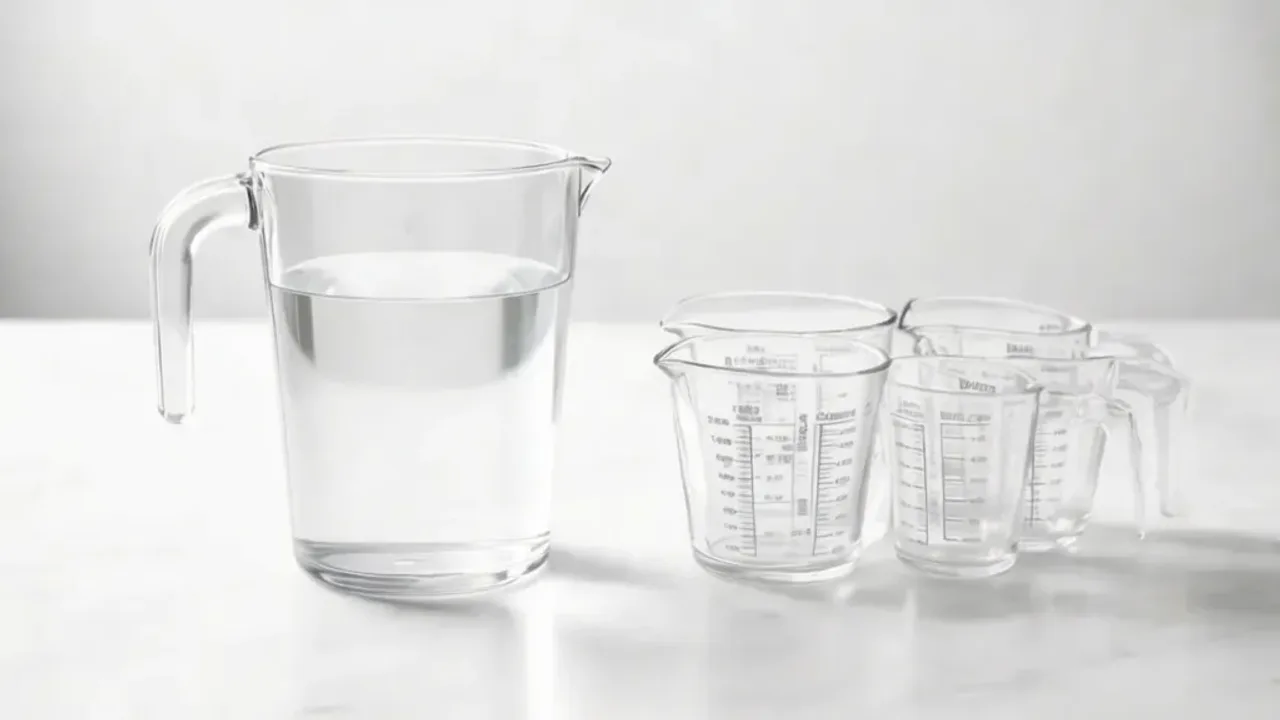 AI-generated image
Key Takeaways:
- One liter converts to 4.23 US cups.
- The US cup standard is 236.588 milliliters.
- Always verify if the recipe uses US or imperial cups to ensure total accuracy.
- Rounding to 4.23 is sufficient for most daily kitchen tasks.
Conversion Calculation Explained
The relationship between these units relies on the defined volume of a standard US cup, which is 236.588 milliliters. By dividing the 1,000 milliliters contained in a single liter by this specific value, you arrive at the conversion factor of 4.23. Maintaining this precise ratio is vital for consistency, as the metric system and US customary units operate on different base scaling methods.
Knowing how to calculate 1 liter to cups properly allows for seamless transitions during various projects. Precision matters. If you are working in a laboratory or a professional kitchen, small deviations can impact your results. Remember that the metric system is based on powers of ten, while US customary units are based on specific volume standards, which is why the conversion factor is not a round number. It requires attention to detail.
Consider these points when performing your own calculations:
- Ensure your measuring container is set to a flat, level surface for maximum accuracy.
- Account for minor differences if using volume versus weight measurements.
- Use 4.23 as your primary multiplier for standard, everyday conversions.
| Liters | US Cups (approximate) |
|---|---|
| 0.5 liters | 2.11 cups |
| 1 liter | 4.23 cups |
| 2 liters | 8.46 cups |
| 3 liters | 12.68 cups |
| 4 liters | 16.91 cups |
| 5 liters | 21.13 cups |
Practical Applications
Precision is often necessary for consistent results in cooking or scientific tasks. When determining 1 liter to cups, follow these steps to maintain accuracy during measurement:
- Identify the required liter volume needed for your project.
- Multiply the liter count by 4.23 to find the cup equivalent.
- Measure the liquid in clear, steady increments to avoid overflow or under-filling.
- Double-check your volume markings before finalizing the mixture.
Frequently Asked Questions
Is the conversion the same for imperial cups?
No, an imperial cup is defined differently than a US cup. One liter is equal to about 3.52 imperial cups because an imperial cup measures approximately 284.13 milliliters.
Why do conversion results sometimes differ?
Differences often arise from how much a person rounds the decimal points. Using 4.23 is the standard approach for general tasks, but higher precision may be required for specific technical work.
What is the most accurate way to measure 1 liter?
Using a standardized graduated cylinder or a calibrated kitchen measuring jug is the most reliable method. These tools are marked to handle metric volumes directly without needing manual conversion.
Can I use a standard drinking cup for this conversion?
Standard household drinking cups are not reliable for volume measurement. Always use standardized measuring cups to ensure 4.23 cups accurately represents one liter.
Does the temperature of the liquid affect the volume?
Liquids can expand or contract slightly based on temperature. For most culinary applications, this change is negligible, but it is a factor to consider in high-precision environments.
To ensure accurate results, always multiply your liter value by 4.23 when converting to US cups. Verification remains the best practice for precision.
Share: