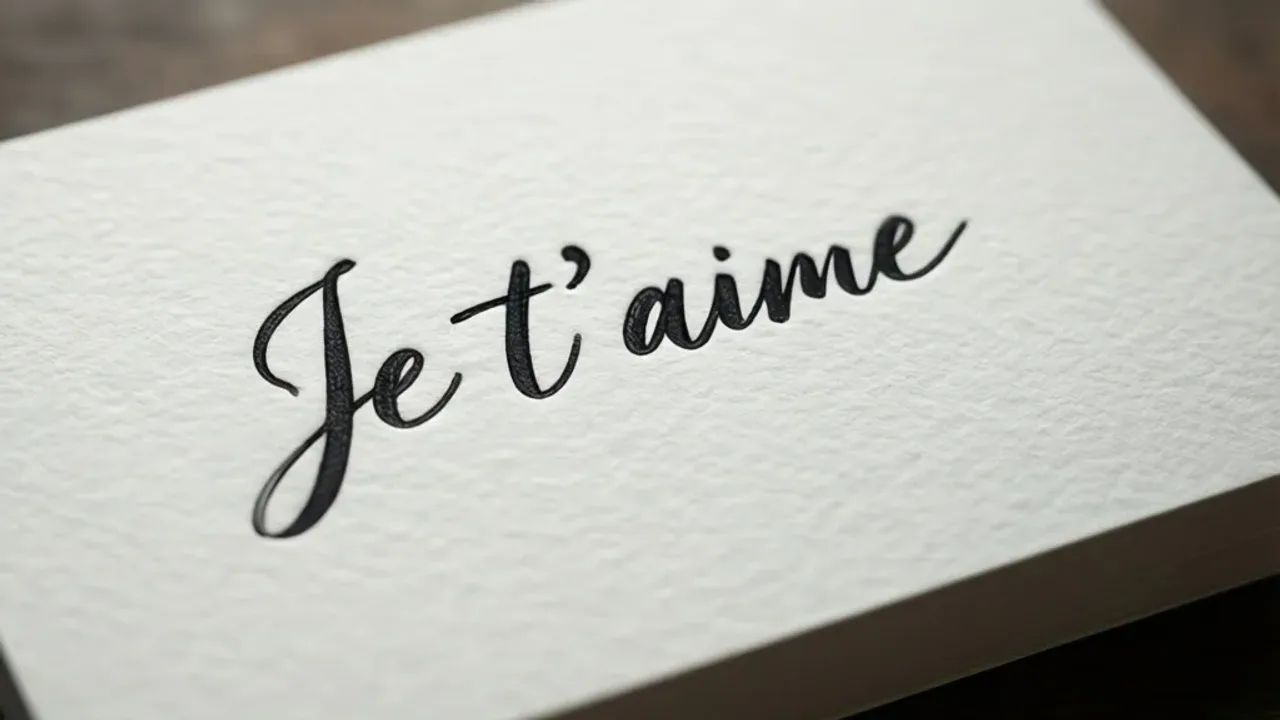
"Je t’aime" is a French phrase that translates to "I love you" in English. Understanding the je taime meaning is essential for anyone looking to express deep affection accurately in French. It is one of the most recognizable phrases in the world, often associated with romance, yet it functions in various emotional contexts.
MeaningsOctober 17, 2026
What Does Je T'aime Mean? English Translation and Usage
 AI-generated image
Key Takeaways:
- The phrase "je t'aime" literally translates to "I love you."
- To respond to this declaration, use "je t'aime aussi" to mean "I love you too."
- The term "t'aime" serves as a shorter, informal variation of the full expression.
- Context is critical for ensuring your message of affection is interpreted correctly.
This expression is the standard way to convey deep affection or romantic feelings toward another person. The construction consists of "je" (I), "t’" (you), and "aime" (love), forming a direct statement of emotion recognized globally as a declaration of love. While the je taime meaning is straightforward, the context in which it is used can vary significantly depending on the relationship between the speaker and the recipient. It is not merely a collection of words, but a profound commitment of sentiment.
How to Use It
Using the phrase correctly depends on the level of formality and the intent of the speaker. Whether you are speaking to a partner or a family member, knowing how to frame your sentence is vital. Refer to the following table for quick reference regarding translation and usage:
| Phrase | English Translation | Usage Context |
|---|---|---|
| Je t'aime | I love you | Standard, sincere expression |
| Je t'aime aussi | I love you too | Reciprocating feelings |
| T'aime | Love you | Informal, casual communication |
The fluidity of the French language allows for these subtle shifts in tone. If you are in a situation where you need to respond to a declaration of love, using the correct variation ensures that your response is as clear as the original statement. It is quite simple to master these variations once you understand the basic grammatical components.
Rules for Correct Usage
To communicate effectively, follow these established linguistic practices when incorporating these phrases into your daily interactions:
- Always use the full "je t'aime" for a clear and complete declaration of love.
- Add "aussi" to the end of the phrase when you need to confirm that your feelings are mutual.
- Reserve the shortened "t'aime" only for very close, informal interactions where brevity is preferred.
- Ensure your tone of voice matches the depth of the phrase you are using.
- Avoid using these phrases in overly professional or clinical settings to maintain their emotional impact.
Things to Remember When Learning
- The phrase is composed of three distinct parts: the subject, the object pronoun, and the verb.
- French speakers use these variations to adjust the emotional weight of their statement.
- Consistency in using the full phrase ensures your meaning is understood without ambiguity.
- The je taime meaning remains consistent across different regions, serving as a universal declaration of love.
- Practice the pronunciation to ensure that the "t'aime" flows smoothly into the "aime."
Frequently Asked Questions
What does "je t'aime" mean in English?
The phrase translates directly to "I love you." It is the most common and standard way to express romantic or deep personal love in the French language.
How do I respond to someone saying "je t'aime"?
If you wish to reciprocate the sentiment, the correct response is "je t'aime aussi." This phrase adds the word "aussi," which translates to "too" or "also," confirming that your feelings are mutual.
Is there a shorter way to say it?
In very casual or informal contexts, people may sometimes use "t'aime." While this is a shortened version of the phrase, the full je t'aime remains the standard and most commonly used form for expressing love.
Can "je t'aime" be used for friends?
While primarily romantic, the phrase is a deep declaration of affection. It is best suited for close family members or partners rather than casual acquaintances.
Why is "aussi" important in this phrase?
Adding aussi is necessary to indicate reciprocation. Without it, the phrase is simply a statement of love rather than a response to one.
To summarize, "je t'aime" is the standard way to express love in French, while "je t'aime aussi" serves as the appropriate response. Always opt for the full phrase to ensure your message is communicated clearly and sincerely.
Share: