Four millimeters is equal to approximately 0.157 inches. This specific length serves as a foundational measurement in various technical, scientific, and everyday contexts. Whether you are working on a precise engineering project, checking the thickness of a material, or simply trying to visualize small dimensions, understanding how long is 4 mm is essential for maintaining accuracy. This guide provides comprehensive conversion data and practical methods to help you grasp this measurement.
MeasurementsOctober 3, 2026
How Long Is 4 mm? 4 mm Equals 0.157 Inches
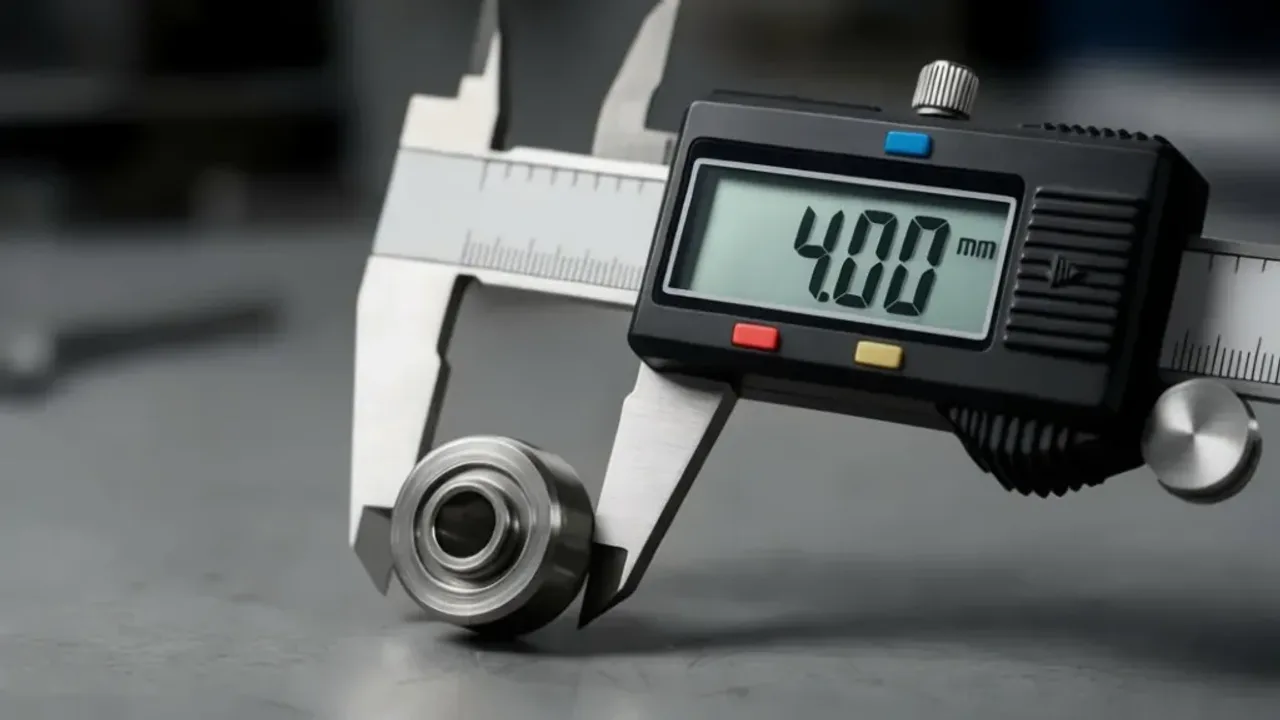 AI-generated image
Key Takeaways:
- A length of 4 mm converts to 0.157 inches.
- The metric system defines 4 mm as 0.004 meters.
- Visualizing 4 mm is easiest by comparing it to common household objects.
- Precision tools like calipers are ideal for verifying this specific dimension.
Measurement Conversions
The metric system is designed for consistency and ease of calculation. When measuring small distances, the millimeter is the standard unit of choice. Because it is base-10, converting to other metric units is straightforward. If you need to translate this measurement into different systems, refer to the following table for quick reference.
| Unit | Conversion Factor |
|---|---|
| Inches | 0.157 inches |
| Centimeters | 0.4 centimeters |
| Meters | 0.004 meters |
| Micrometers | 4,000 micrometers |
Standardization and Utility
The millimeter functions as a fundamental unit of length within the International System of Units (SI). It represents exactly one-thousandth of a meter. Global standards ensure this measurement remains consistent across scientific and engineering sectors. When an engineer asks how long is 4 mm, the answer is always constant, providing a reliable baseline for manufacturing parts, assembling electronics, and drafting technical designs.
Precision is vital. Small variations can lead to significant errors in complex systems. By adhering to standardized metric measurements, professionals ensure that components manufactured in different locations fit together perfectly. This consistency is the backbone of modern global trade and industrial production.
Best Practices for Precision
- Ensure all measuring tools are properly calibrated.
- Always verify units before performing conversions.
- Utilize digital calipers for the highest degree of accuracy.
- Avoid manual estimation when dealing with sub-millimeter tolerances.
Practical Applications in Daily Life
While 4 mm is a technical measurement, it appears frequently in everyday objects. Recognizing this length helps in identifying material specifications, such as the thickness of glass, flooring, or the diameter of small hardware. By having a tangible reference point, you can better understand the scale of items without needing a ruler.
- Stacking items: Two standard US pennies stacked together provide a thickness very close to 4 mm.
- Mechanical components: The lead of a standard mechanical pencil is often close to this diameter.
- Material selection: Many laminate floorings are measured in millimeters to ensure they fit under door frames.
- Verification: Use a calibrated metric ruler to confirm dimensions before starting any home improvement project.
It is important to note that while 4 mm is a precise distance, physical materials may have slight variations due to manufacturing tolerances. Always account for these potential deviations when calculating clearances or mechanical fits.
Advanced Measurement Techniques
For those requiring extreme precision, standard rulers may not suffice. Digital calipers offer a clear readout that eliminates the ambiguity of analog markings. When measuring an object to see if it meets a 4 mm requirement, the jaws of the caliper should be closed gently against the surface. Excessive pressure can compress the material, leading to an inaccurate reading.
Environmental factors can also play a role. Metals expand and contract with temperature changes. While 4 mm will remain 4 mm in a vacuum, extreme heat or cold can cause minor fluctuations in physical objects. Professional workshops often maintain controlled temperatures to keep these measurements stable.
Frequently Asked Questions
How can I convert 4 mm to inches?
To convert from millimeters to inches, you must divide the millimeter value by 25.4. This mathematical operation yields approximately 0.157 inches.
Is 4 mm considered a large measurement?
No. In the context of engineering and physics, 4 mm is a very small distance. It is typically utilized for measuring thin sheet materials or small mechanical fasteners.
How does 4 mm compare to centimeters?
There are exactly 10 millimeters in one centimeter. Therefore, 4 mm is equal to 0.4 centimeters. This is one of the most common conversions used in classrooms and workshops.
Why is the millimeter preferred for this length?
The metric system utilizes a base-10 structure, which significantly simplifies arithmetic operations. This makes 4 mm a standard, easy-to-use reference point for international technical documentation and blueprints.
What tools are best to measure 4 mm?
A high-quality metric ruler is sufficient for general tasks. However, digital calipers provide much higher precision, which is necessary for engineering tasks requiring exact 4 mm tolerances.
Can I estimate 4 mm without tools?
Yes, you can use common objects as a reference. As mentioned earlier, stacking two coins or comparing the width to a pencil lead provides a quick, reliable visual estimate of the distance.
Summary
Knowing how long is 4 mm is essential for maintaining accuracy in technical and everyday tasks. Always rely on standardized metric conversion factors to ensure your measurements remain consistent and precise across all your projects.
Share: