Identifying fish that start with b is a common task for researchers, anglers, and nature enthusiasts interested in marine biodiversity. These species inhabit a wide range of environments, from cold mountain streams to the vast reaches of the Pacific Ocean. Whether you are studying taxonomy or planning your next trip to a coastal habitat, understanding these creatures is essential.
Word ListsOctober 15, 2026
Fish That Start With B: A Complete Guide to Popular Species
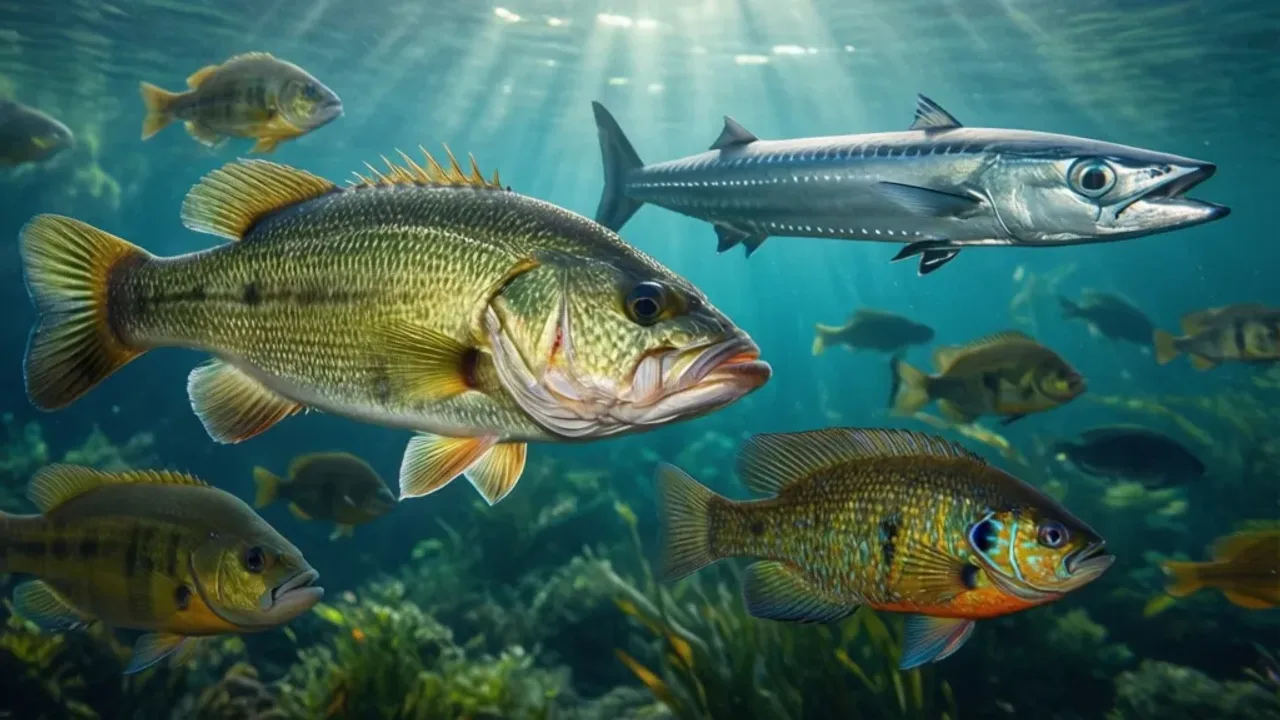 AI-generated image
Key Takeaways:
- These species include the bass, barracuda, and bluegill.
- They thrive in diverse global environments, including freshwater and saltwater.
- Proper identification requires observing specific physical traits like scale patterns and body shape.
- Anglers often target them for sport in various coastal habitats.
Brief and Descriptive Overviews
The world of aquatic life is incredibly broad, and those categorized under the letter B are among the most fascinating. From the aggressive predators of the reef to the quiet inhabitants of deep lakes, these animals play a vital role in their respective ecosystems.
- Bass are common freshwater game fish known for their fighting spirit and strength.
- The barracuda is a predatory ray-finned fish found in tropical and subtropical oceans.
- Bluegills are small, colorful freshwater fish often recognized by the dark spot on their gill cover.
- Brook trout thrive in cold, clear streams and are highly prized by anglers.
- Burbot is a unique freshwater cod relative that prefers deep, cold lakes.
- Bigeye tuna are large, powerful swimmers found in open ocean environments.
- Banded butterflyfish are known for their distinct striped patterns and reef-dwelling lifestyle.
- Black crappie are popular panfish often found in the weed-covered areas of lakes.
- Bonefish are elusive, lightning-fast speedsters found on shallow sandy flats.
- Bowfin are prehistoric survivors that possess a unique, lung-like air bladder.
Comparison of Selected Species Characteristics
Comparing these species helps us understand their biological needs and behaviors. The following table highlights common traits for three distinct species.
| Species | Primary Habitat | Typical Size |
|---|---|---|
| Largemouth Bass | Freshwater | 20 inches |
| Barracuda | Marine | 5 feet |
| Bigeye Tuna | Marine | 300 pounds |
Scientific and Taxonomic Profiles
Taxonomy provides the framework for learning about these animals. By looking at their scientific classification, we can see how different species are related.
- Micropterus salmoides, the largemouth bass, belongs to the Centrarchidae family.
- Sphyraena contains various barracuda species, characterized by elongated bodies and sharp teeth.
- Lepomis macrochirus is the scientific name for the bluegill, a staple of North American ecosystems.
- Salvelinus fontinalis, the brook trout, is a member of the char genus within the salmon family.
- Lota lota is the only freshwater member of the Gadidae family, known as the burbot.
- Thunnus obesus, the bigeye tuna, is classified within the Scombridae family.
- Chaetodon striatus, the banded butterflyfish, serves as a key indicator species for reef biodiversity.
- Pomoxis nigromaculatus, or black crappie, exhibits a distinct mottled coloration pattern.
Preparation for Field Observation
Observing these animals in the wild requires preparation. Whether you are an amateur naturalist or a professional researcher, following best practices ensures safety and data accuracy.
- Research the specific coastal habitat where you intend to observe fish that start with b.
- Use identification guides approved by the California Department of Fish and Wildlife (CDFW).
- Check seasonal regulations regarding the harvest of native fish species.
- Use polarized eyewear to view marine species clearly beneath the water surface.
- Document findings according to National Oceanic and Atmospheric Administration (NOAA) standards.
Playful and Humorous Descriptions
Sometimes, viewing these creatures with a lighthearted perspective helps us appreciate their unique personalities and behaviors in the wild.
- The barracuda is the sleek, toothy speedster of the reef.
- Bluegills are the feisty toddlers of the pond.
- Bass act like local celebrities of the lake.
- Brook trout hide in cold mountain shadows.
- Burbots have hardy, unique faces that only a mother could love.
- Bigeye tuna are long-distance ocean runners.
- Banded butterflyfish are the fashionistas of the reef.
- Black crappies are the mysterious, spotted wallflowers of the underwater world.
Educational Fact Sheets
Understanding the biology of these fish is key to conservation. Each species has adapted to its environment in remarkable ways.
- Bass can grow over 20 inches in ideal conditions.
- Barracudas can reach speeds of 27 miles per hour.
- Bluegills nest in colonies and guard their eggs.
- Brook trout require water temperatures below 68 degrees Fahrenheit.
- Burbot are nocturnal hunters using barbels to sense prey.
- Bigeye tuna possess specialized eyes for deep-sea hunting.
- Banded butterflyfish are strictly diurnal.
- Black crappie are sensitive to water clarity.
Creative and Narrative Sketches
The lives of these animals are filled with silent dramas beneath the surface. Here are a few ways to visualize their existence.
- A bass glides through reeds like a silent shadow.
- The barracuda slices through currents with precision.
- Sunlight illuminates the blue and orange hues of a bluegill.
- The brook trout dances against the mountain flow.
- A burbot rests motionless on the lake floor.
- The bigeye tuna patrols the deep ocean.
- A banded butterflyfish weaves through coral mazes.
- The black crappie hides in submerged timber.
The Ecological Importance of Native Species
Native fish species are the foundation of healthy aquatic ecosystems. When we talk about fish that start with b, we are discussing animals that have evolved over millennia to fill specific roles, such as primary predators, herbivores, or scavengers. Protecting these habitats ensures the survival of marine biodiversity for future generations.
Small changes in water temperature or quality can have massive effects. For instance, the brook trout serves as a biological barometer for stream health. If these sensitive species vanish, it is a clear sign that the environment is suffering.
Frequently Asked Questions
What is the most popular fish of this group?
The bass is the most popular game fish due to its prevalence in North American angling. Anglers seek this aggressive predator for its strength. See FWS for more details.
Are all these animals freshwater species?
No, the list includes marine and freshwater species. Barracuda and bigeye tuna live in the Pacific Ocean. Data verified by NOAA.
Which individual is the largest?
The bigeye tuna can grow significantly larger than many others. It often reaches weights exceeding 300 pounds. Referenced by IUCN data.
Do brook trout require specific water conditions?
Yes, they need cold, clear, and well-oxygenated streams. They indicate the health of a mountain coastal habitat.
How can one identify a bluegill?
Look for a deep, compressed body. They feature a dark spot on the gill cover.
Are there endangered species on this list?
Some populations face pressure from habitat loss. Conservation efforts are ongoing globally to protect these vital marine species.
Successfully identifying fish that start with b relies on understanding their unique ecological niches. Always consult local regulations before any harvest. Fish are fascinating. Nature is vast. Respect the water.
Share: