The primary instruments that start with i include the idiophone, the imzad, and the Irish bouzouki. These musical entries provide a unique range of sounds, from percussive resonance to complex melodic string traditions that span across diverse global cultures.
Word ListsOctober 24, 2026
Instruments That Start With I: Idiophones, Imzad, and More
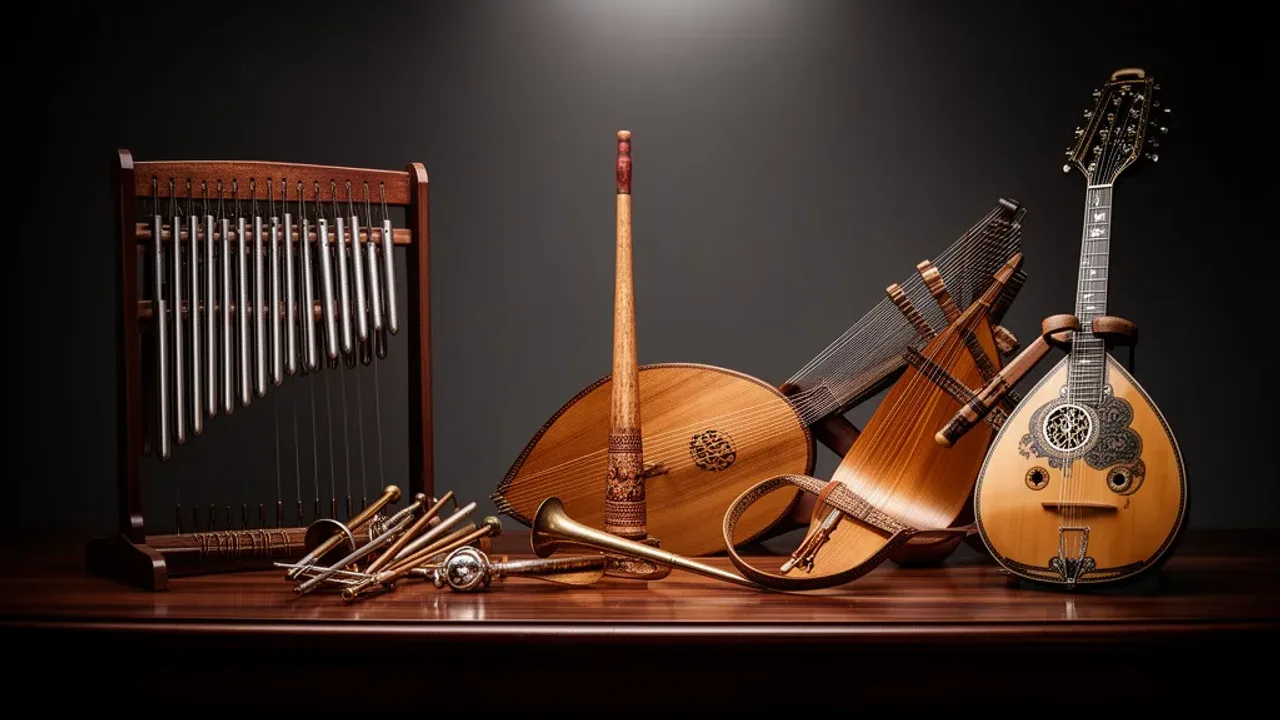 AI-generated image
Key Takeaways:
- The idiophone is a broad classification of instruments that produce sound through the vibration of their own physical bodies.
- The imzad is a traditional single-stringed bowed instrument crafted with a gourd resonator and skin covering.
- The Irish bouzouki is a versatile 8-stringed instrument that has become a fundamental component of modern folk music.
- Understanding the specific mechanical properties of instruments that start with i helps performers choose the right tool for their musical goals.
Concise Descriptions
- The idiophone creates sound primarily through the vibration of the instrument itself without strings or membranes.
- An imzad is a traditional bowed instrument used by the Tuareg people in the Sahara region.
- The Irish bouzouki is a stringed instrument derived from the Greek bouzouki for use in Irish traditional music.
- Idiophones serve as a foundational category for many percussion tools used in various global ensembles.
- The imzad features a resonator made from a hollowed gourd covered in goat or gazelle skin.
- Irish bouzoukis are typically played with a flat pick to produce a resonant, bright, and metallic tone.
- Various bells and gongs are classified as idiophones because their solid bodies vibrate to create sound.
- The imzad is often associated with the social and poetic gatherings of Tuareg society.
- Modern Irish bouzoukis often incorporate pickups to allow for amplification in large concert venues.
- The versatility of these instruments allows them to adapt to both traditional and contemporary musical settings.
Technical Summaries
- Idiophones operate without the use of strings or membranes, relying instead on the material properties of the body to produce resonance.
- The imzad is characterized by its horsehair string and bow, providing a haunting, melodic quality essential to regional ceremonies.
- An Irish bouzouki features a flat back and a scale length often exceeding 25 inches, allowing for complex melodic ornamentation in folk arrangements.
- Classification of an idiophone depends on the method of excitation, such as striking, shaking, or scraping the surface of the object.
- The construction of an imzad involves delicate craftsmanship, specifically in the tensioning of the skin over the gourd resonator for optimal sound.
- Technically, the Irish bouzouki is often tuned in octaves, which provides a rich, full-bodied sound suitable for both solo and ensemble accompaniment.
- The density of the material used in an idiophone determines the pitch and sustain of the sound produced during a performance.
- The bridge of an Irish bouzouki is critical for intonation and ensuring that the 8 strings maintain proper tension across the fretboard.
- Tuareg musicians often use specific natural resins on the horsehair of the imzad bow to create the necessary friction for clear sound production.
- The integration of these instruments into professional orchestras requires careful consideration of their unique acoustic output.
Creative Profiles
- The idiophone speaks in a language of vibrations, where every strike tells a story of resonant matter and physical presence.
- Beneath the desert stars, the imzad sings a solitary song, echoing the ancient rhythms of the landscape and the voices of ancestors.
- Irish bouzouki strings hum with the spirit of the hills, weaving tales of old in every modern chord played by the performer.
- Like a whisper in the wind, the imzad carries the weight of history on a single, slender string played with grace.
- Idiophones are the grounded pulse of the earth, turning simple physical contact into a complex dance of sound and rhythm.
- The Irish bouzouki dances between the clarity of a guitar and the deep soul of a mandolin, bridging the gap between eras.
- Every note from an idiophone rings with the authenticity of its material, whether it is wood, metal, or stone.
- The imzad represents the resilience of cultural traditions in the face of changing modern environments across the Sahara.
- Music enthusiasts often find the Irish bouzouki to be the perfect companion for storytelling through song.
- These instruments remind us that the roots of music are found in the simplest interactions with our surroundings.
Professional Listings
- Category: Idiophone. Primary function: Percussive resonance. Material: Varies widely by cultural origin and intended pitch.
- Category: Imzad. Primary function: Melodic accompaniment. Region: Sahara region. String count: 1.
- Category: Irish bouzouki. Primary function: Melodic and harmonic support. String count: 8. Body type: Flat back.
- Idiophones: Essential for rhythmic foundation in global ensembles and orchestral settings.
- Imzad: A culturally significant bowed instrument requiring specialized training and deep respect for its heritage.
- Irish bouzouki: A versatile addition to any Celtic-influenced musical repertoire, favored for its depth and sustain.
- Percussive Idiophones: Used in rhythmic sections to provide structure and accentuation to the overall composition.
- Bowed Imzad: Requires precise movement to evoke the mournful and beautiful tones expected in traditional performances.
- Harmonic Bouzouki: The 8-string configuration allows for lush chord voicings that provide a solid base for vocalists.
- Cultural Heritage: Each of these instruments preserves a specific history that is vital to its respective community.
Educational Fact Sheets
- Idiophones are 1 of the 4 main categories in the Hornbostel-Sachs system of musical instrument classification.
- The imzad is traditionally played by women in Tuareg society to accompany vocal poetry and social events.
- The Irish bouzouki was introduced to Irish music in the 1960s and has since become a staple of the folk genre.
- Every rattle and bell is a subset of the idiophone family, defined by its solid, vibrating structure during use.
- The imzad’s bow is traditionally made from a curved stick and horsehair, mirroring the construction of early historical stringed instruments.
- Irish bouzoukis are often customized with different pickup systems for live performance amplification in diverse acoustic spaces.
- Historical context suggests that the evolution of these instruments was driven by local resource availability and musical necessity.
- The classification of idiophones includes both struck and shaken varieties, such as cymbals and maracas.
- Tuareg traditions emphasize the role of the imzad as a bridge between the physical and spiritual realms of their society.
- Global music education programs frequently cite these instruments as examples of how geography shapes sound.
Comparison Table
| Instrument | Primary Category | String Count | Region of Origin |
|---|---|---|---|
| Idiophone | Percussion | 0 | |
| Imzad | Bowed String | 1 | |
| Irish bouzouki | Plucked String | 8 |
Preparation and Care Guidelines
- Verify the classification of the idiophone to ensure the correct playing technique is applied for the specific material.
- Inspect the gourd resonator of the imzad for any structural fatigue or cracks before every performance.
- Ensure the Irish bouzouki is tuned correctly, as many players prefer octave tuning for a fuller, more resonant sound.
- Research the regional history of instruments that start with i to better understand their cultural context and significance.
- Consult professional luthiers if your stringed instrument requires maintenance, fret leveling, or bridge adjustment.
- Practice consistent bowing pressure if you are learning the imzad to maintain a steady and clear tone throughout the piece.
- Store all instruments in climate-controlled environments to prevent damage caused by humidity and temperature fluctuations.
- Clean the surface of idiophones with appropriate materials to maintain their resonant properties over time.
- Replace strings on the Irish bouzouki regularly to ensure the instrument remains bright and responsive during practice.
- Engage with local musical communities to learn traditional techniques passed down through generations.
Frequently Asked Questions
What defines the idiophone category?
An idiophone is any instrument that produces sound through the vibration of its entire body, rather than relying on strings or membranes. According to The Metropolitan Museum of Art, these define the percussion family. This is a fundamental concept in Encyclopedia Britannica musical theory.
Is the imzad difficult to play?
The imzad requires specialized training and a deep understanding of traditional Tuareg musical techniques. As detailed by UNESCO, it is a highly skilled craft passed down through generations. Mastery takes years of dedicated practice.
Why is it called an Irish bouzouki?
It is called an Irish bouzouki because it is a modification of the Greek bouzouki, adapted specifically to suit the tuning and melodic needs of Irish traditional music. Research from the Irish Traditional Music Archive confirms this evolution. It remains a popular choice for folk musicians.
Are there other instruments that start with i?
The list includes the idiophone, the imzad, and the Irish bouzouki as the most prominent examples. Further reading on The Library of Congress indicates these represent diverse traditions. Each offers a unique sound profile.
How should I care for my instruments that start with i?
Maintenance depends on the specific construction of the instrument, such as protecting the gourd of an imzad or keeping the strings of an Irish bouzouki clean. Proper care is essential for instrument longevity. Always store your equipment in a stable, climate-controlled environment.
Selection Advice
Choosing between instruments that start with i should be based on your specific acoustic needs and the genre you intend to play. Evaluate the physical requirements for bowing or plucking to ensure your choice fits your skill level. Prioritize instruments that offer the tonal quality you desire for your compositions.
Selecting the right musical tool requires a clear understanding of the specific mechanical and cultural properties of each device. Always prioritize the proper maintenance of your chosen equipment to ensure the best possible sound and long-term durability. By respecting the history and technical requirements of these instruments, you can achieve a more profound connection to the music you create and perform.
Share: